What feels easier? What feels harder? What am I learning about how my brain actually works?
THE AUTHENTIC LIFE APPROACH
You do not need to become someone else.
You need a life that fits the person you already are. The Authentic Life Approach is a framework for understanding how you are wired, recognizing what matters, and building a life that works with you instead of constantly fighting you.
WHY TALA EXISTS
You are not a failed version of someone else.
A lot of people spend years interpreting difficulty as character evidence: Why can’t I do this? Why can’t I stay consistent? Why does this seem easier for everyone else? TALA begins somewhere else.
Maybe the person is not defective. Maybe the system, environment, expectation, pace, or strategy is a mismatch. TALA starts with honest self-understanding, adaptable structure, and the belief that your life should fit the person actually living it.
TALA Reframe
What if this struggle is a mismatch
instead of a defect?
THE THREE PILLARS
Find Yourself. Find Your Tribe.
Find Yourself. Find Your Tribe.
Make Your Mark.
The Three Pillars describe the journey through TALA. They are not boxes to check or steps you finish once. You return to each of them as your life, needs, relationships, and sense of purpose evolve.
01 · SELF-AWARENESS + AUTHENTICITY
Find Yourself
Coming home to who you actually are beneath the performance. Understanding your wiring, energy, values, strengths, needs, and the parts of yourself you learned to hide.
Explore this pillar ↓ 02 · BELONGING + SAFE CONNECTIONFind Your Tribe
Creating and finding relationships and environments where you no longer have to mask, shrink, or perform in order to belong.
Explore this pillar ↓ 03 · PURPOSE + SUSTAINABLE IMPACTMake Your Mark
Contributing your gifts, creativity, and wisdom in ways that matter without destroying yourself in the process.
Explore this pillar ↓
PILLAR ONE
Find Yourself
Coming home to who you actually are beneath the performance.
What it means
Understand your patterns, needs, energy, values, strengths, interests, and the places where you may have learned to mask, overperform, or abandon yourself just to keep up.
What it addresses
The exhaustion of trying to become the person you think you are supposed to be. The confusion of living by other people’s definitions of success. The belief that your needs are evidence of weakness instead of information about your design.
What this can look like
- Recognizing the environments where your brain works best.
- Understanding your energy instead of constantly overriding it.
- Separating your values from expectations you inherited.
- Exploring purpose through tools such as Adaptive Ikigai without forcing yourself into a single permanent answer.
PILLAR TWO
Find Your Tribe
Belonging should not require disappearing.
What it means
Build and find relationships, communities, workplaces, partnerships, and friendships where there is room for the actual person—not just the version that is easiest for everyone else to understand.
What it addresses
The isolation that can come from masking, shrinking, over-accommodating, or feeling surrounded by people while still never feeling fully seen.
What this can look like
- Recognizing which relationships restore you and which consistently deplete you.
- Learning where honesty is safe and where boundaries are necessary.
- Creating community around shared values rather than forced sameness.
- Participating in simple TALA experiences that remind people they are not alone.
PILLAR THREE
Make Your Mark
Purpose without self-erasure.
What it means
Contribute your gifts, creativity, experience, and wisdom in a way that feels aligned and sustainable. Your mark does not have to be a career, a company, fame, or a giant public legacy.
What it addresses
The two extremes of over-giving until you disappear or hiding what you have to offer because sharing it has become too costly.
What this can look like
- Building work around strengths instead of constantly compensating for mismatch.
- Creating something, teaching something, researching something, raising someone, helping someone, or improving the place you are already standing.
- Defining contribution in a way that includes your own continued existence inside the life you are building.
THE FIVE PRINCIPLES OF TALA
The journey matters. How we move through it matters too.
The Three Pillars describe the journey. The Five Principles of TALA guide how we move through it—without turning growth into another system for judging ourselves.
01
Mismatch, Not Defect
Many struggles are not evidence of brokenness. They are evidence of mismatch between how your brain naturally works and the environment, expectation, pace, or system you have been asked to function within.
TALA Question: What if this struggle is a mismatch instead of a defect?
02
Compassion Before Change
Shame may create urgency. It rarely creates sustainable growth. Lasting change begins with understanding rather than punishment.
TALA Question: What would kindness sound like here?
03
Failure Is Data
Every failed planner, abandoned routine, burnout, shutdown, restart, and experiment contains information. The goal is not to judge the result. The goal is to learn from it.
TALA Question: What is this experience trying to teach me?
04
Fit Over Force
The best system is not the most impressive one. The best system is the one your nervous system and real life can actually sustain.
TALA Question: What would make this easier instead of harder?
05
Tiny Steps Create Real Change
Transformation is rarely dramatic. Most lasting change arrives quietly: one small adjustment, one tiny improvement, one slightly easier day, then another.
TALA Question: What is the next small step?
TALA Experiment
This is not an emergency.
This is an experiment.
A RETURNING PATH
14 Days · Awareness
45 Days · Integration
90 Days · Evolution
Not a rigid system. A way to keep finding your way back.
TALA is built around reflection, experimentation, adjustment, and return. You notice what is happening, try a better fit, observe what happens, learn from the result, and adjust as your life changes.
Notice
Try
Observe
Adjust
Return
What is beginning to feel more natural? What am I no longer forcing? What feels more like me?
What have I learned? What no longer fits? Growth changes the blueprint. Update accordingly.
FROM THE TALA LIBRARY
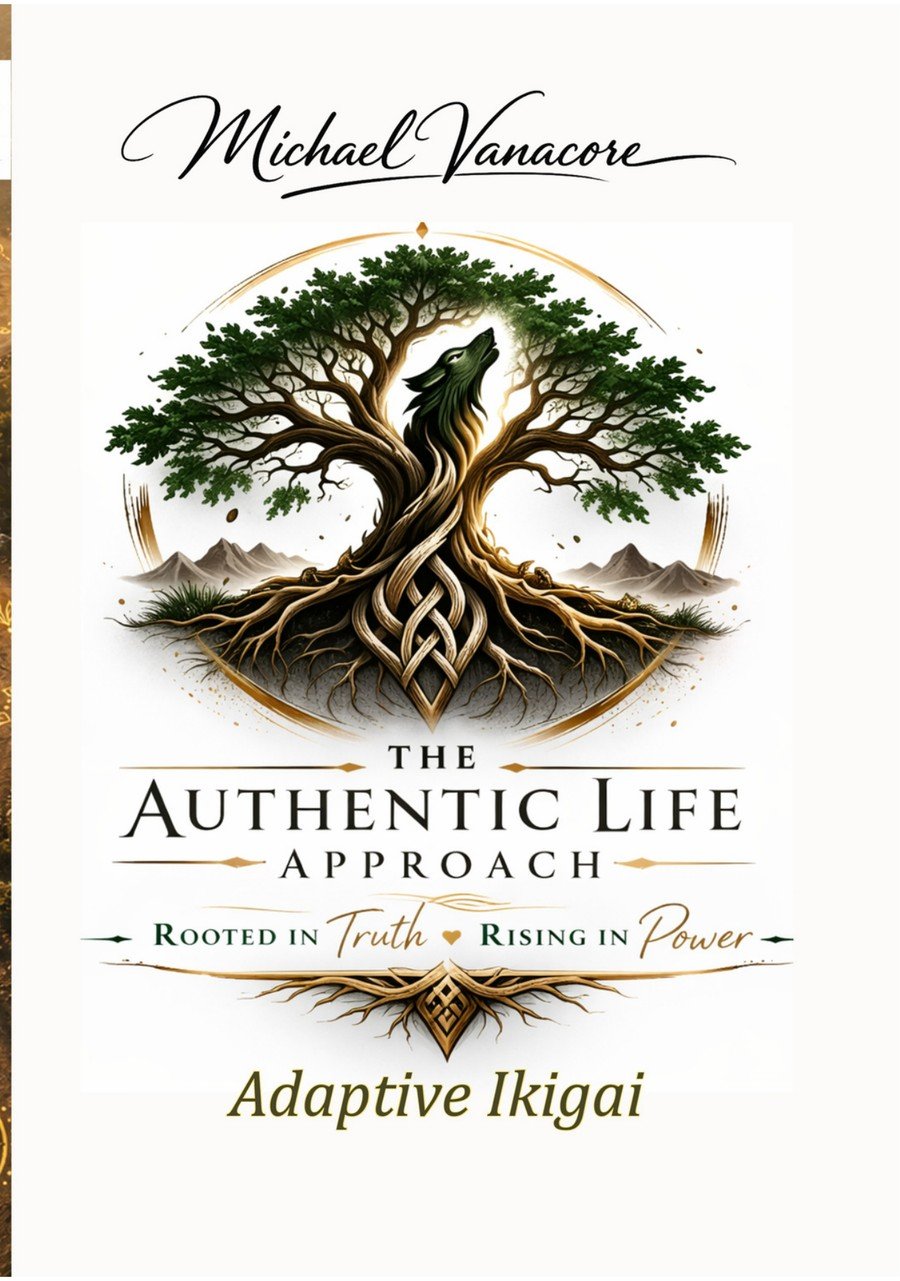
The framework becomes something you can use.
TALA lives through books, workbooks, tools, experiments, research, and community experiences. The library is where the ideas become practical.
NEW RELEASE · ADAPTIVE IKIGAI
Purpose that adapts to the person living it.
Adaptive Ikigai applies the TALA approach to purpose, meaning, energy, and fit—without requiring one perfect lifelong answer. It belongs naturally inside Find Yourself and becomes a bridge toward sustainable contribution.
READY TO EXPLORE?
Take what fits. Try something. Learn from what happens.
You do not have to solve your whole life from one page. Start with something useful, or step into the community and share one authentic moment.
Read the TALA Journal →